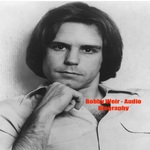


Bobby Weir - Audio Biography
Robert Hall Weir, better known as Bob or Bobby Weir, was born on October 16, 1947, in San Francisco, California. He is an American singer, songwriter, and guitarist, best known as a founding member of the legendary rock band, the Grateful Dead. Weir’s contributions to the band, as well as his solo work and collaborations with other artists, have solidified his place as an iconic figure in the world of rock music.
Early Life and Introduction to Music
Bobby Weir was born into a family with deep roots in music. His parents, John (Jack) Parber and a fellow college student named Phyllis, gave him up for adoption due to their young age and inability to care for a child. Weir was adopted by a wealthy couple, Frederic Utter and Eleanor Cramer Weir, who lived in the San Francisco suburb of Atherton.
Weir’s adoptive parents recognized his musical talents early on and encouraged his artistic pursuits. At the age of 12, he received his first guitar as a Christmas gift from his grandparents. Weir quickly developed a passion for the instrument and began taking lessons, drawing inspiration from the likes of Doc Watson, Josh White, and Joan Baez.
As a teenager, Weir attended Menlo-Atherton High School, where he met future Grateful Dead bassist Phil Lesh. The two bonded over their shared love of music and began playing together in various folk and bluegrass bands. It was during this time that Weir also met Jerry Garcia, who would become his lifelong friend and musical collaborator.
Formation of the Grateful Dead
In 1964, Weir, along with Garcia, Lesh, Ron “Pigpen” McKernan, and Bill Kreutzmann, formed a band called Mother McCree’s Uptown Jug Champions. The group played a mix of folk, bluegrass, and blues music, with Weir contributing rhythm guitar and vocals. As the band evolved and electric instruments were incorporated, they changed their name to The Warlocks.
However, upon discovering that another band had already claimed the name “The Warlocks,” the group ultimately settled on the name “Grateful Dead,” which was suggested by Garcia after he stumbled upon the phrase in a dictionary. The newly christened Grateful Dead began performing at local venues and quickly gained a dedicated following in the San Francisco Bay Area.
Weir’s Role in the Grateful Dead
As a member of the Grateful Dead, Bobby Weir played a crucial role in shaping the band’s sound and style. His rhythm guitar work provided a solid foundation for Garcia’s lead playing, and his vocal harmonies added depth and texture to the band’s songs. Weir also contributed a number of original compositions to the band’s repertoire, including classics like “The Other One,” “Sugar Magnolia,” and “Cassidy.”
Weir’s songwriting often explored themes of Americana, counterculture, and spirituality, reflecting the values and interests of the band and their fans. His compositions showcased his versatility as a musician, with songs ranging from the psychedelic rock of “Playing in the Band” to the country-tinged
This content was created in partnership and with the help of Artificial Intelligence AI.
© 2026 Inception Point AI · more info
Artwork and data is from the podcast’s open RSS feed; we link directly to audio · Read our DMCA procedure See more
This podcast may use tracking and attribution and dynamic content insertion
Stats: Statistics are produced by Megaphone to help Bobby Weir - Audio Biography to understand how many downloads it is getting, or how many people are listening. Your device’s IP address and user agent is used to help calculate this figure. Megaphone is IAB v2 certified. Here is more detail about podcast statistics.
Tracking and attribution: Megaphone or its partners may connect the fact you listened to this podcast to an action elsewhere on the internet. For example - it may spot a device that downloaded an episode of Bobby Weir - Audio Biography later visited the website of an advertiser; or it may track that a device that listened to Bobby Weir - Audio Biography also listened to a different show. This form of attribution is used to measure advertising effectiveness.
Dynamic content insertion: Megaphone may use limited data that they know about you - the device you’re using, the approximate location you’re in, or other data that can be derived from this, like the current weather forecast for your area - to change parts of the audio. Bobby Weir - Audio Biography may do this for advertising or for other forms of content, like news stories.
Bobby Weir - Audio Biography is able to use the above tools since its podcast host or measurement company offers this service. It doesn’t mean that this individual podcast uses them, or has access to this functionality. We use open data.
Listen and follow
 Apple Podcasts
Information for podcasters
- This podcast previously hosted on Spreaker (until Jun 2026), and now hosts with Megaphone. See changes across podcasting.
- This podcast doesn’t have a trailer. Apple Podcasts has a specific episode type for a trailer, which also gets used by many other podcast apps: but there isn’t one correctly marked in the RSS feed from Megaphone.
- There is a different RSS feed listed in the Podcast Index (here) and Apple Podcasts (here). Our systems normally pull RSS feed addresses from Apple Podcasts; and it should normally match what’s in the Podcast Index.
- This podcast appears to be missing from Truefans, Podcast Index, iVoox, and Luminary. We list all the podcast directories to be in.
- Validate this podcast’s RSS feed with Livewire, Truefans or CastFeedValidator