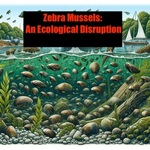


Zebra Mussels: An Ecological Disruption
The Relentless Tide: The Zebra Mussel’s Invasion of North America
In the remote and ancient Ponto-Caspian region, a rather unassuming creature has called the fresh waters home since time immemorial. The zebra mussel, so named for its striped pattern reminiscent of the iconic equid, is a humble bivavlve mollusk. Unextraordinary in virtually every regard, one would scarcely suspect that this diminutive organism was once poised to reshape the ecological landscapes of an entire continent. For untold centuries, the zebra mussel flourished within the lakes, rivers and inland seas that straddle the borders of Eastern Europe and Western Asia. Its life cycle was finely tuned to the rhythms of this isolated aquatic realm - a portrait of symbiosis painted over millennia upon the evolutionary canvas. That profound equilibrium was discordantly shattered in the early 19th century by a most unlikely force - the rise of global maritime commerce and trade. You see, the zebra mussel reproduces by releasing immense volumes of microscopic larvae into the open waters to be carried away by currents. An ingenious survival strategy for saturating its endemic territory, but one that would soon facilitate the mussel’s dramatic transcontinental journey. These mollusk progeny were drawn in through the intake vents of the very first wooden sailing vessels plying their trade across the high seas. The larvae made themselves at home, developing into mature mussels within the ships’ enclosed ballast tanks used for stabilizing their hulls. With each port of call along trade routes, more mussel stowaways were admitted, merrily multiplying within their unlikely aquatic vessels. So it was that the unsuspecting ships discharged ballast water from across the Atlantic - water teeming with the larval vanguard of the mussel’s North American invasion. When the first specimens found their way into the waterways of eastern Canada in the late 1980s, an environmental scenario of unprecedented proportions was set into motion. Prolific breeders, zebra mussels colonize any solid underwater surface available. In short order, they established dense droves spanning every submerged rock, log and man-made material they could find in the warm, inland waters of the Great Lakes - a rich, unfamiliar habitat to call their own. Each mature female is capable of producing upwards of a million larvae each year, turning the waters into a biological assault of mussel seed. Thus unfolded one of the most ecologically damaging invasive species catastrophes in modern history. Let me show you how this happened…
Across generations, the zebra mussel siege pushed south, west, east, into every contiguous waterway they could reach. Nothing could impede their remorseless spread - lakes, rivers, tributaries, industrial pipes and infrastructure. The army of mussels collectively filters obscene quantities of water through their indiscriminate sessile feeding. Basking in filter feeding mode with shells open, zebra muss
This content was created in partnership and with the help of Artificial Intelligence AI.
© 2026 Inception Point AI · more info
Artwork and data is from the podcast’s open RSS feed; we link directly to audio · Read our DMCA procedure
This podcast may use tracking and attribution and dynamic content insertion
Stats: Statistics are produced by Megaphone to help Zebra Mussels: An Ecological Disruption to understand how many downloads it is getting, or how many people are listening. Your device’s IP address and user agent is used to help calculate this figure. Megaphone is IAB v2 certified. Here is more detail about podcast statistics.
Tracking and attribution: Megaphone or its partners may connect the fact you listened to this podcast to an action elsewhere on the internet. For example - it may spot a device that downloaded an episode of Zebra Mussels: An Ecological Disruption later visited the website of an advertiser; or it may track that a device that listened to Zebra Mussels: An Ecological Disruption also listened to a different show. This form of attribution is used to measure advertising effectiveness.
Dynamic content insertion: Megaphone may use limited data that they know about you - the device you’re using, the approximate location you’re in, or other data that can be derived from this, like the current weather forecast for your area - to change parts of the audio. Zebra Mussels: An Ecological Disruption may do this for advertising or for other forms of content, like news stories.
Zebra Mussels: An Ecological Disruption is able to use the above tools since its podcast host or measurement company offers this service. It doesn’t mean that this individual podcast uses them, or has access to this functionality. We use open data.
Listen and follow
 Apple Podcasts
Information for podcasters
- Podcast GUID:
e4bee32a-f047-5f44-a39e-3e8ecb89302c - This podcast previously hosted on Spreaker (until May 2026), and now hosts with Megaphone. See changes across podcasting.
- This podcast doesn’t have a trailer. Apple Podcasts has a specific episode type for a trailer, which also gets used by many other podcast apps: but there isn’t one correctly marked in the RSS feed from Megaphone.
- There is a different RSS feed listed in the Podcast Index (here) and Apple Podcasts (here). Our systems normally pull RSS feed addresses from Apple Podcasts; and it should normally match what’s in the Podcast Index.
- This podcast appears to be missing from Truefans, iVoox, and Luminary. We list all the podcast directories to be in.
- See this podcast’s listener numbers, contact details and more at Rephonic
- Validate this podcast’s RSS feed with Livewire, Truefans or CastFeedValidator