

Signal Hill Insights release Audio on the Move, showing how Canadians listen to audio in-car
AM / FM radio maintains its position as Canada’s most-used audio medium in the car, accounting for 46% of time yesterday.
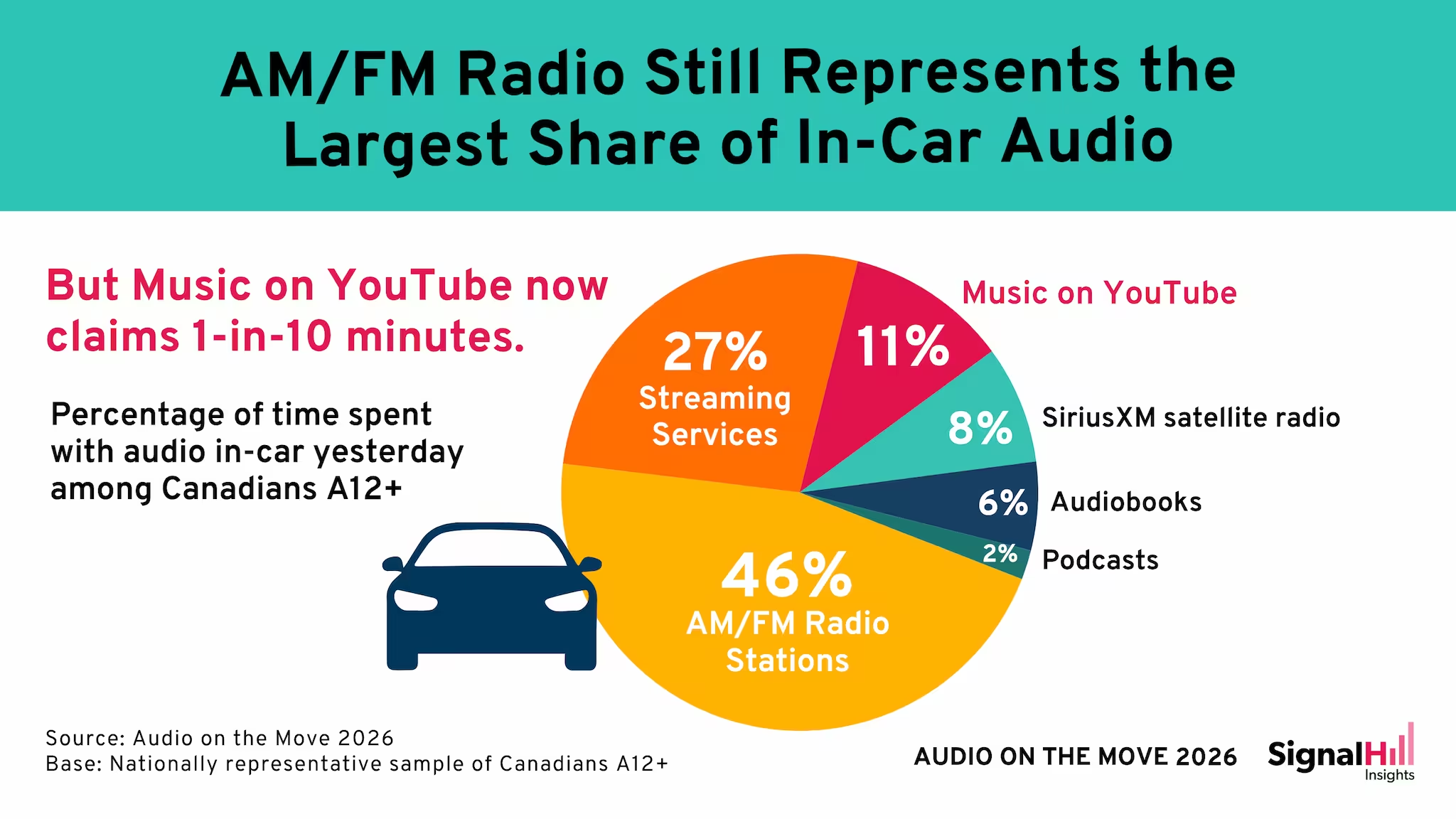 Music streaming services are second, used for 27% of time yesterday. Music on YouTube (including YouTube Music) claims third place with 11% of in-car listening. These are among the findings in the just-released second report from Signal Hill Insights’ Audio on the Move, Canada’s first holistic study providing the growing audio industry a comprehensive view of how and when Canadians aged 12+ are listening.
YouTube’s ranking for in-car listening is consistent with the platform becoming a top destination for audio. As revealed in the first report from Audio on the Move, music on YouTube now represents the second highest share of ad-supported audio consumption overall.
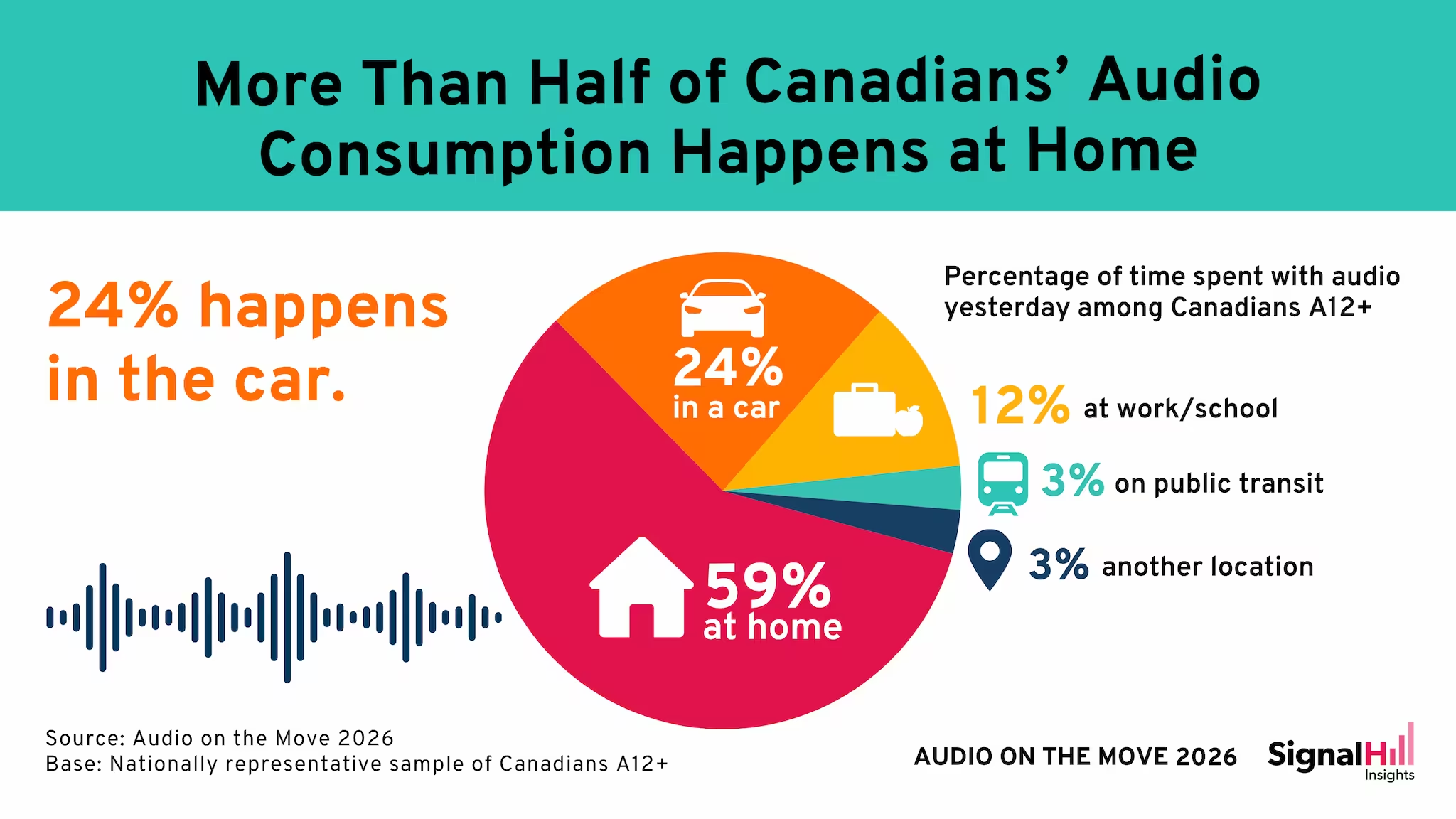
Looking at all listening, the car is where 24% of Canadians’ audio consumption time happens, while the majority of time, 59%, happens at home. 12% of listening time yesterday happened at work or school.
“Like the overall audio landscape, in-car consumption is dynamic and changing,” said Matt Hird, Vice-President of Research for Signal Hill Insights. “While radio maintains a strong lead, streaming services are claiming an increasing share. If we combine YouTube and music streaming services, the gap between streaming and AM/FM is closing quickly.”
A Supermajority of Canadians Dislike Fully AI-Generated Podcasts and Music
According to the Ipsos AI Monitor 2026 Canada ranks at the bottom of a list of 32 countries for excitement over products and services using AI, and top of the list for saying those same services make them nervous. Audio on the Move findings show this skepticism carries over to opinions on fully AI-generated podcasts and music.
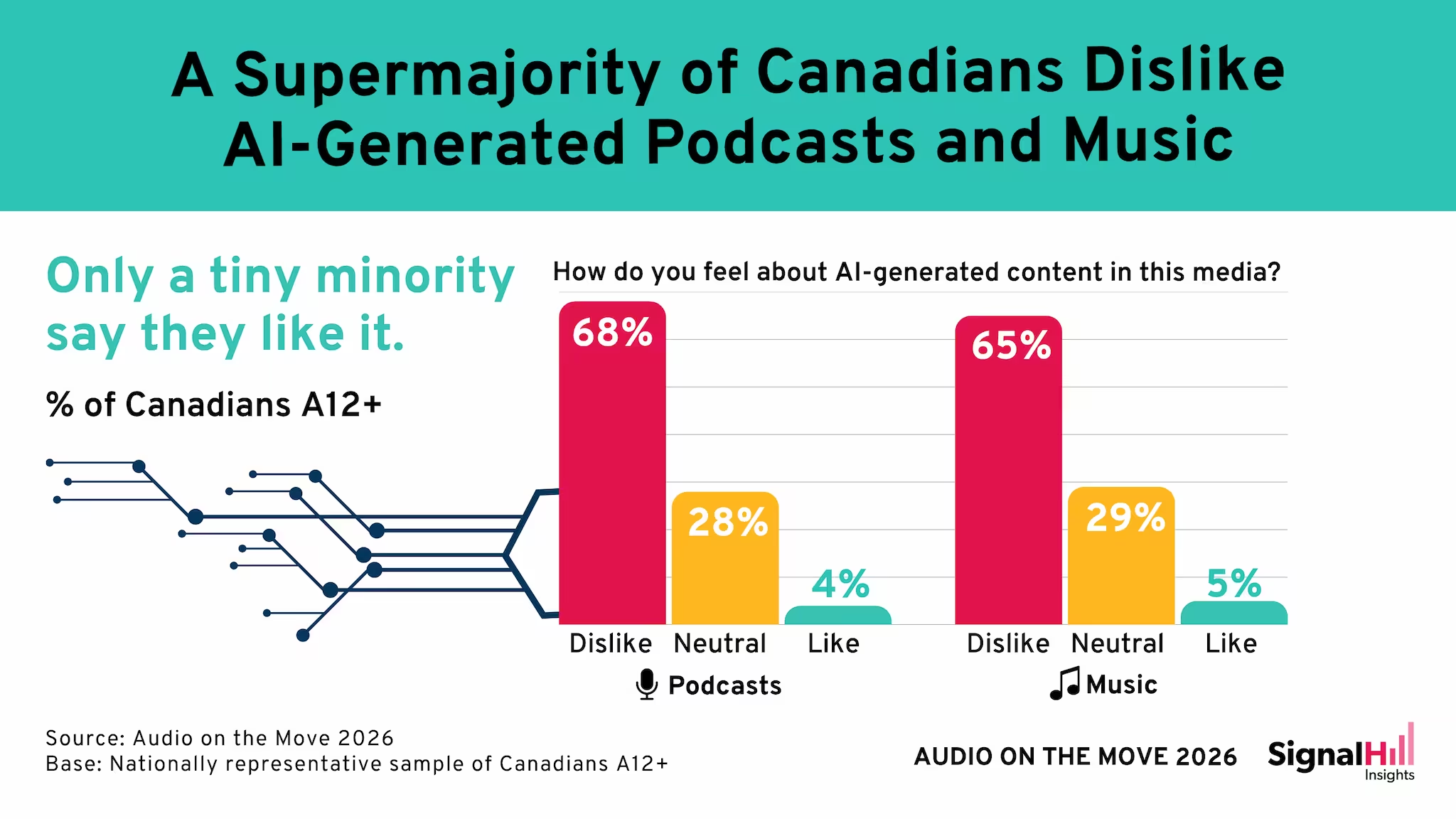
Audio on the Move asked the study’s nationally representative sample of 6,161 Canadians aged 12+, “How do you feel about the use of AI to create content for each of the following media? Note that this refers to content that has been fully created with AI, rather than just edited or touched-up.”
Only 5% said they like AI-generated music, while 4% said they like AI-generated podcasts. A supermajority said they dislike AI-generated content on these media platforms: 65% dislike it for music, and 68% dislike it for podcasts. Less than a third are neutral: 29% for music and 28% for podcasts.
The youngest group of Canadians, aged 12 - 17, are comparatively less negative and more neutral towards AI-generated audio, but the scales don’t tip to a net positive sentiment. Half dislike either AI-generated podcasts or music, while 42% are neutral about AI-generated podcasts and 37% are neutral about AI-generated music.
“The steep rise in fully AI-generated music and podcasts has sparked controversy in the audio industry, which is why we thought it important to understand how these products are perceived by Canadian consumers,” said Hird. “The findings from Audio on the Move show there is very little support. The number who dislike AI-generated audio outnumber those who like it by a factor of at least 13 to 1.”
“In order to level-set. Audio on the Move also asked respondents’ sentiment towards fully AI-generated social media images and videos, as well as online articles, blogs and news. A clear majority of Canadians also dislike AI-generated content on these platforms. The fewest, 60%, dislike AI-generated images or memes on social media – just five points fewer than for music.”

About Signal Hill Insights
Signal Hill Insights is an audio research firm with a core focus on brand lift studies for podcasts, streaming audio and radio, and survey-driven audience insights. Signal Hill partners with broadcasters, publishers and advertisers on custom research solutions for audio, including industry leaders like Acast, All-City Network, Audioboom, Cumulus/Westwood One, Gumball, Libsyn, Soundrise, SiriusXM, and Triton Digital.
This is a press release which we link to from Podnews, our daily newsletter about podcasting and on-demand. We may make small edits for editorial reasons.