Spreaker is enabling wholesale copyright theft for podcasts

Spreaker is making it easy to make copies of other podcasts, and is making money from it, Podnews has discovered.
We’ve learnt from multiple publishers that their shows have appeared duplicated on platforms like Apple Podcasts, Spotify and others - causing confusion for listeners, and reducing advertising revenue.
We’ve discovered more than a thousand shows have been copied in this way, and are earning revenue for Spreaker as well as the people who have copied them.
And, when we looked into how Spreaker works, we were astonished how simple it is to make a full copy of someone else’s show, publish it to Apple Podcasts, and start earning money. So let’s start there.
How easy is it to copy someone else’s show into Spreaker?
It couldn’t be simpler to copy a show without the owner’s permission to Spreaker’s platform - and you can do it on a free account. Plus, you can enable monetisation (dynamically inserted ads and a “supporter’s club”) on Spreaker’s free plan as well.
With a free account, the “import episodes” page couldn’t be easier: simply copying an RSS feed address into Spreaker. On this page there is no discussion of copyright, or link to the terms and conditions - just a simple way to import “episodes from existing feed”.
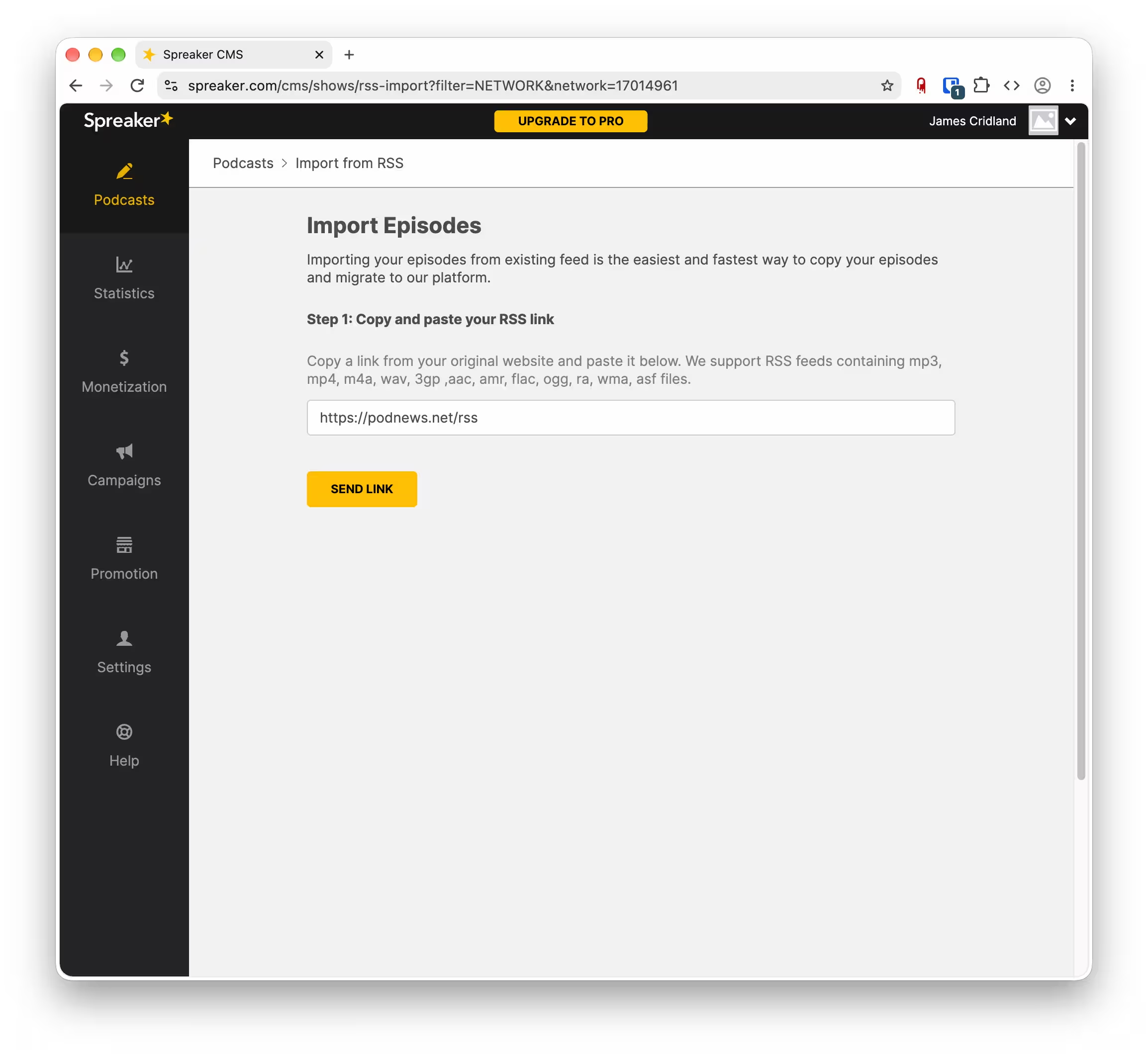 We were expecting the tool to read the email address from the RSS feed, and give some sort of check that the owner wanted to transfer the episodes over to Spreaker. It doesn’t - it just copies the show audio, and all the episode metadata, into the Spreaker platform, without any notification to the original podcast producer that you’ve done so.
But, this isn’t just a one-off copy. The Spreaker platform gives you the ability to automatically check every hour for new episodes - effectively allowing your copy of this show to be kept perpetually up to date. We see little reason why a podcaster would ever want this feature when switching podcast host; but it makes the ability to copy a podcast much easier, since that copy is kept up to date automatically by Spreaker’s systems.
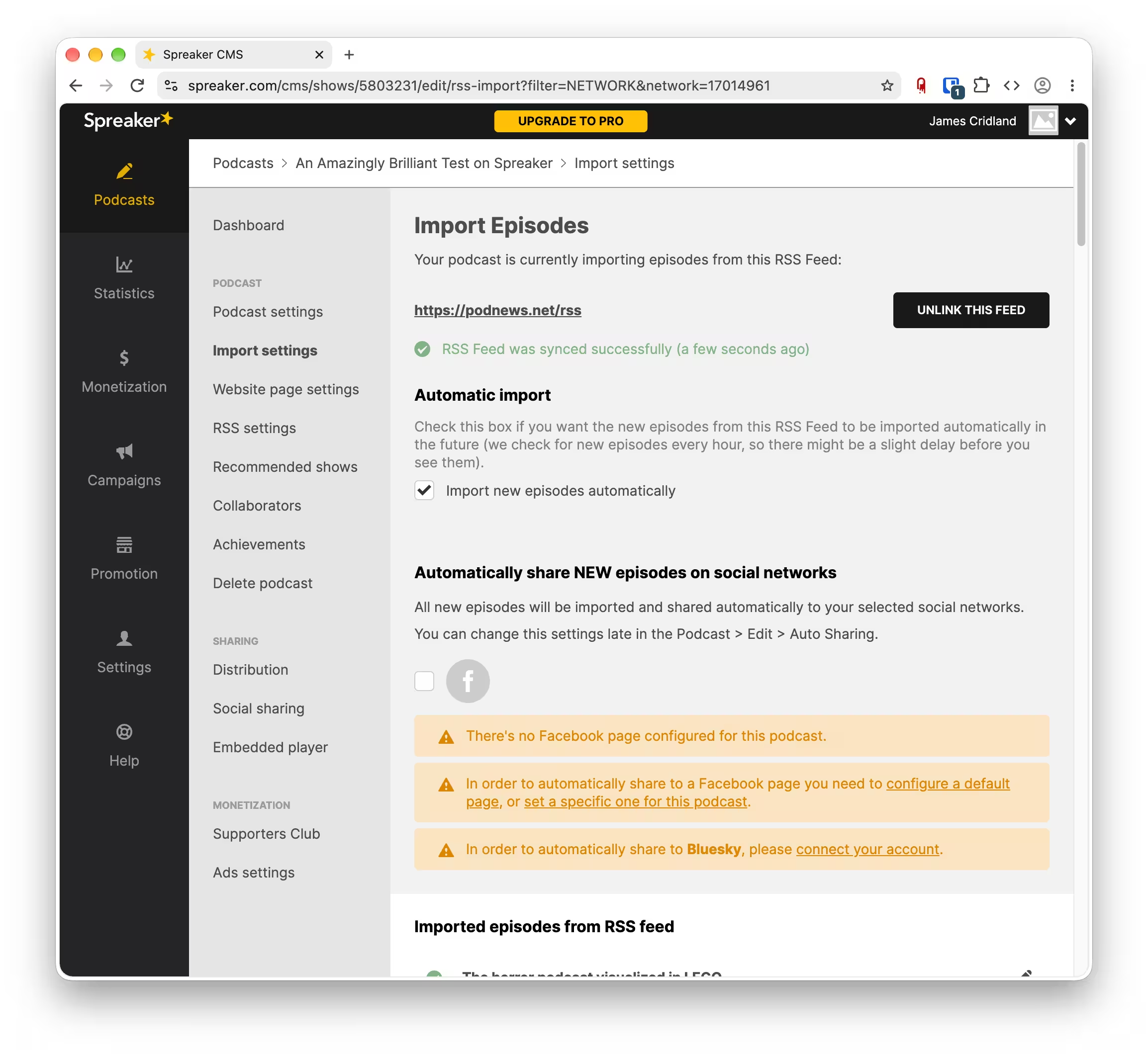
It took just minutes to copy the Podnews Daily RSS feed, and republish it on Spreaker. The copy contains all the metadata from the existing episodes - artwork, dates, episode descriptions and titles.
From here, we can go into the “distribution” tab and submit this show to all the main podcast directories, like Apple Podcasts, Spotify, iHeartRadio, and many more. (We didn’t do this step, because we don’t want this podcast to really be there).
All this is possible from a free account, with no credit card details being given to sign up. But it’s not just free - it earns money, too. In Spreaker’s interface, clearly highlighted, a button to turn on monetisation.
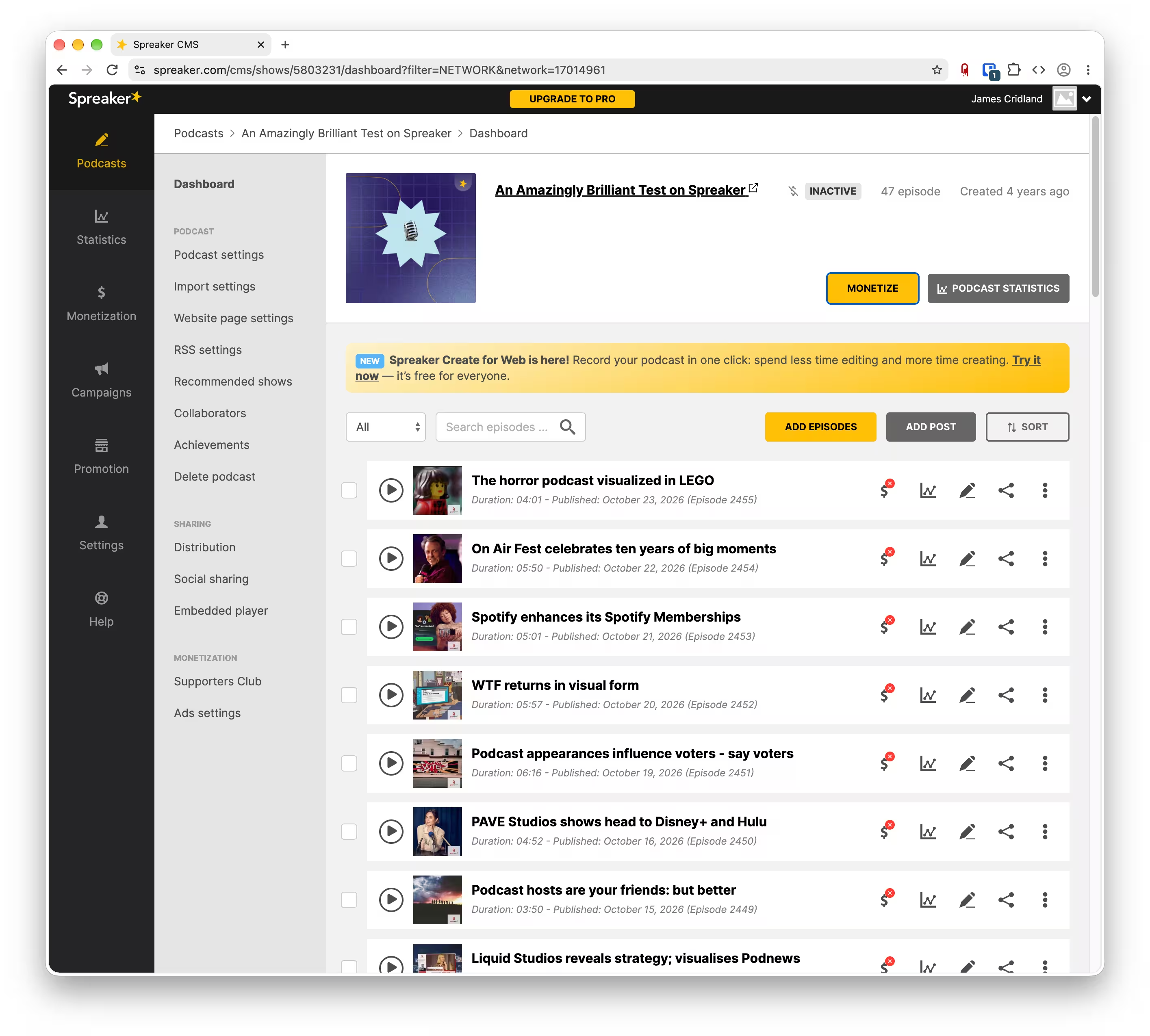 We tried applying for monetisation.
The monetisation process is clearly referred to a human at Spreaker as part of the company’s published approval process; and the company’s mostly European staff were asleep when we made our application for monetisation.
We assumed that, with a title clearly marked “Test” and obviously copied content from a podcast we had seemingly no connection to, we would be blocked from monetising it.
We were wrong.
By 10.30am central European time, our application for monetisation had been approved. Now, we were able to put prerolls and postrolls automatically into the content; and the service would also look for silence in the middle of shows and automatically put ads in there, too.
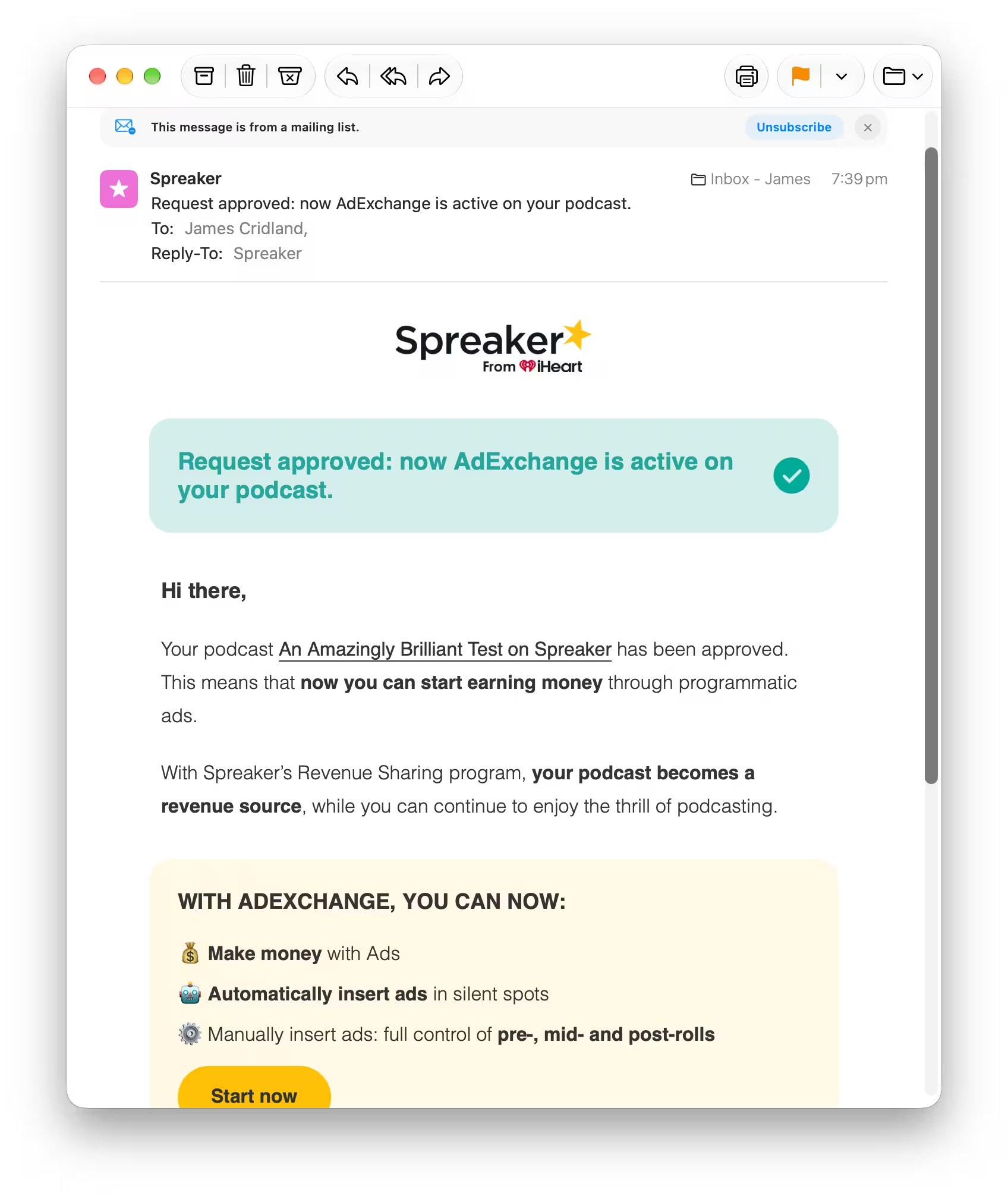 Why would Spreaker have so quickly given access to monetisation, when it’s clear this is a test podcast, and there is no real connection to the imported show?
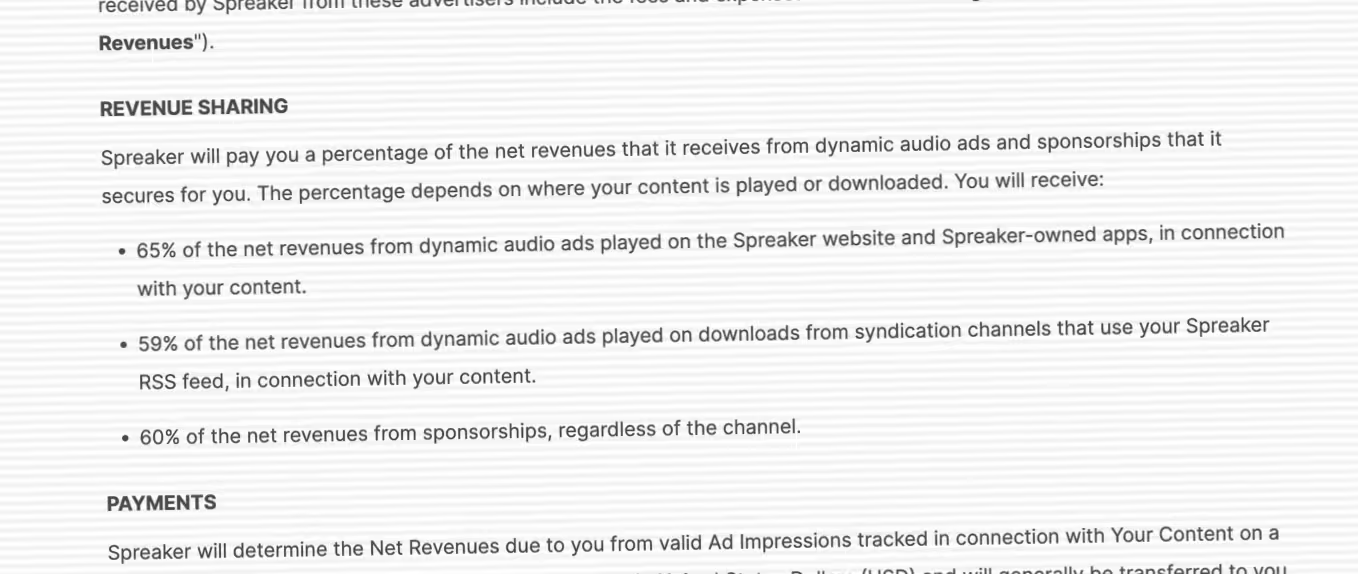
It’s probably because the terms and conditions are pretty clear - Spreaker keeps up to 41% of all the ad revenue. You could argue that it’s in their interest to make it as easy as possible to copy shows to earn money from them: since they stand to earn a significant amount of revenue as a result, especially if they then withhold the payment to the person who did the pirating.
How many podcasts have been pirated onto Spreaker?
We downloaded a fresh copy of the Podcast Index, as of Saturday 24 Oct 2026.
We wanted to look at all shows where:
- a copy of a show was on Spreaker as well as another host
- the same number of episodes were listed for each
- both copies were in the Apple Podcasts directory
- the original host wasn’t Librivox
We found 1,778 pirated podcasts that were copied into Spreaker in this way.
In Apple Podcasts, Adam Carolla Show (copy) is a typical example. Unlike the real Adam Carolla Show, the author of the podcast has been changed to “juyio”, rather than the real author (PodcastOne / Carolla Digital). It’s been stripped of its tracking, but still has the latest episodes. It appeared to have been made on Saturday 19 Sep 2026 - and so has been quietly sitting there for over a month.
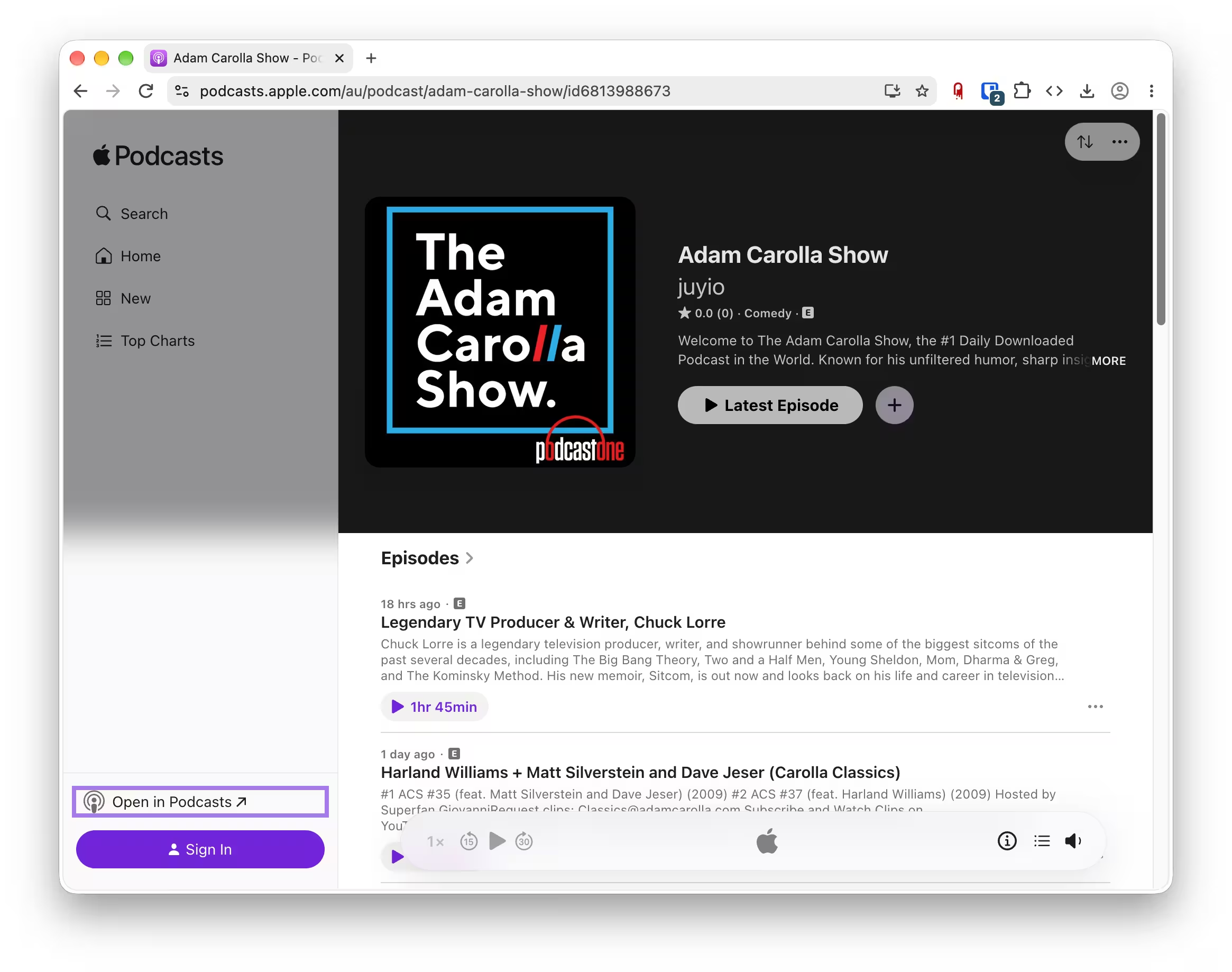 We found copies of Bloomberg News Now, Acast’s Canadian True Crime, Audiochuck’s Crime Junkie, Red Seat Ventures’ Crime Weekly, Vox Media’s Criminal, two copies of History Hit, SiriusXM’s Hidden Brain, The New Yorker’s In The Dark, Simplecast’s Morbid, Airwave and Motley Fool’s Motley Fool Hidden Gems Investing, Wave’s Not Gonna Lie with Kylie Kelce, Goalhanger’s The Rest is Politics, and many more. Some have been removed by Apple Podcasts; many are still there, causing duplicate search results.
(Librivox offers audiobooks with a public domain licence. Spreaker hosts hundreds of these shows, too - with users earning revenue from content they didn’t make.)
How we did this: The Podcast Index’s data is available at the bottom of their index page as an SQLite3 file. You can download that, and then use software like DB Browser for SQLite to query it. We used an SQL query you’ll find on this page, which you can copy and run yourself.
What effect this has on podcast publishers
Any plays of the Spreaker copies will not appear in the official download numbers for these shows. The Spreaker copies don’t earn the original publishers any money from advertising, and count against them in terms of charts like Apple Podcasts and Spotify.
Sometimes, as Lisa Lacy tells us, the show starts charting - due to the way the podcast charts reward new followers. That’s a significant threat to the “real” podcast.
If a listener subscribes to a Spreaker copy by mistake - and it’s easy enough to do, as is clear from the screenshot above - then that listener’s ratings and reviews don’t go to the original show, and nor does any credit for downloads or ad revenue. They hear double the number of ads that they might otherwise hear, too; and since the original publisher has no control of the ads that Spreaker jams into these podcasts, the ads may be wildly inappropriate, too.
Spreaker - and the person who pirates these shows - earn from the additional ads that the company slaps into these pirated copies of the podcasts. Just not the original publisher.
We asked Spreaker what it was up to
We contacted Spreaker’s PR company, and asked them for a response to these questions:
- Why is Spreaker facilitating this large-scale copying of podcasts from others?
- How much revenue has been earned by creators in this way?
- How many shows are currently on the Spreaker platform that use the “automatic import” setting?
- How many shows have been removed by Spreaker support for copyright violation?
Unsurprisingly, the company, which is owned by iHeart, didn’t answer any of our questions. Instead, it provided us with a statement:
Spreaker does not encourage or condone the uploading of content by anyone who doesn’t have the rights to it. Our Community Rules, which are linked from our show creation page and included in the Terms of Service every creator accepts at sign-up, are clear: Don’t upload content that isn’t yours. We take appropriate actions whenever a violation of our terms of service is found. We also honor the
podcast:lockedtag in our RSS importer.
We’d suggest that the company knows better than this.
At a minimum, Spreaker should ensure that it only imports shows from RSS feeds with permission from that feed’s owner. This is usually achieved by either sending an email to the feed’s owner directly to ask permission via a link; or requiring a claim code to be pasted in the feed, which only the feed owner can do. Spreaker has done neither of these. It doesn’t even make copyright clear on the import page, nor link to the Community Rules from anywhere in its dashboard once you’ve added your first show.
When it comes to monetisation, the company shouldn’t blindly accept imported shows without even a cursory check. It’s a trivial exercise - and one that can be achieved programmatically. Spreaker hasn’t bothered.
It’s also a trivial piece of work to check that a show isn’t merely a duplicate of an already existing show. We’ve even documented how to do it, above. Spreaker has demonstrably failed to do even this.
The podcast:locked tag is a nice suggestion; but it’s not supported by many podcast hosts quite yet. One podcast host that doesn’t support it is, er, Spreaker itself, which doesn’t appear to let you add it to your own podcast.
The company claims that it takes “appropriate actions whenever a violation of our terms of service is found”: but in just a few hours, we’ve found 1,778 examples where it hasn’t done so.
But, when they have so many shows all earning revenue for them - 41% of all ad revenue stays with Spreaker, and even more if they then suspend the user who pirated the shows - why would they bother?
Support us: Podnews relies on support from people like you, as well as corporate supporters like, er, Spreaker. It’s how we can report what’s really going on in this industry, not just the fluffy press releases. We’d welcome your support so we can continue to highlight stories like these. Thank you.