How to use AI in Podcasting: The Exciting Opportunity — and the Legal Minefield


AI is no longer the stuff of science fiction. The technology has arrived, and it’s making waves in the podcasting world. Creators are routinely using these tools to write show notes, edit interviews, mix and sweeten audio, create artwork, and even generate synthetic voices. For busy podcasters, these tools feel like magic—doing in seconds what once took hours.
But here’s the catch: with every new innovation come new legal questions, and AI is creating more of them than any tool we’ve seen before. The same technology that makes your production workflow smoother, if used carelessly, can expose you to copyright claims, privacy violations, or even lawsuits from guests, collaborators, sponsors, and members of the public.
In this article, we’ll unpack some major legal issues podcasters need to understand before allowing the machines to take over.
Copyright and Ownership: Who Really Owns AI-Generated Content?
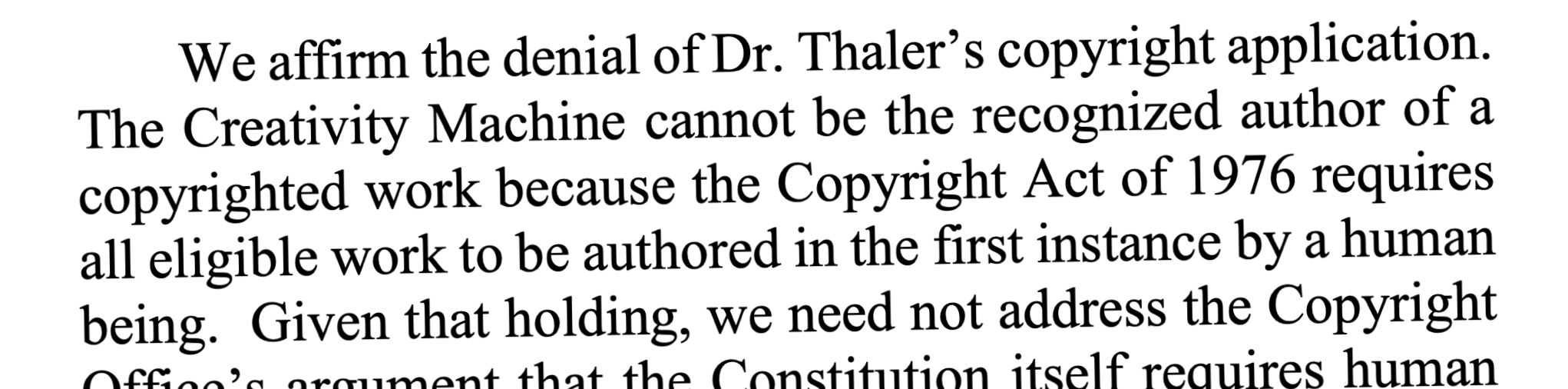
Long before AI became a reality, in cases involving animal-created artwork, U.S. copyright regulators and Courts have held that only humans can hold copyright. An important recent case, Thaler v. Perlmutter, confirmed that works without meaningful human authorship aren’t eligible for copyright registration. In other words: the machine can’t be the author.
As legal precedent, what this means is that if an image, voice track, or text is created entirely by AI, no one truly “owns” it. You might have input the prompts. You might have paid for it. Yet, in the eyes of the law, it isn’t going to be considered yours.
That could be a problem if you rely on AI for things like:
- Your podcast’s logo or cover art
- Theme music or voice-overs
- Episode scripts, intros, or social-media copy
If that work is purely AI-generated, it may not be protected—and worse, it could infringe on someone else’s copyrighted material.
What this means for you: Use AI as a tool, not as a substitute for your own creative efforts. The more you direct, revise, and humanize the output, the stronger your ownership claim. Add your creative input—rewrite, re-record, or remix—and document that contribution.
Infringement and the Hidden Risks in AI Training Data
Most AI tools are trained on enormous datasets scraped from across the internet. Some of that material is public domain… but much of it is not. This issue is front and center in lawsuits like Getty Images v. Stability AI, where artists and rights-holders allege that AI companies trained their models on copyrighted works without permission. In one prominent case, AI company Anthropic settled claims for $1.5bn.
What this means is that when you use an AI system to generate art, music, or text, you can’t always know where its “inspiration” came from. If the tool you’re using spits out something too similar to an existing copyrighted work, you could find wind up publishing an infringing derivative work. And in the crosshairs of a costly, time-consuming and embarrassing lawsuit.
The takeaway: Choose tools with transparent licensing policies. If a company can’t clearly tell you what rights you have to the AI output—or where its training data came from—treat that as a red flag.
And remember: if your AI-generated content looks suspiciously familiar, don’t use it. The time saved isn’t worth the risk.
Voice Cloning and the Right of Publicity
One of the most exciting (and dangerous) uses of AI in podcasting is synthetic voice cloning. All it takes is a short sample to train on, and an AI can mimic anyone’s voice—your own, your co-host’s, even a celebrity’s.
If you’re thinking, “Wow, that’s cool,” you’re not wrong. But if you’re thinking, “Could I make Morgan Freeman introduce my show?” Stop. Just don’t.
Using someone else’s voice or likeness (especially a celebrity’s) without consent can violate the right of publicity; a state-law protection that gives individuals control over how their image, name, and voice are used commercially. In the US, 37 states, including California, New York, and Tennessee (through the new “ELVIS Act”) have such laws in place and treat this especially seriously.
Even using AI to “enhance” or “clean up” a guest’s voice can raise issues if it alters their tone or meaning without their permission.
Best practice: Get explicit written consent from anyone whose voice you use—real or synthetic. Update your Podcast Guest Release to include language authorizing limited use of AI tools for editing or enhancement, provided it doesn’t misrepresent what the person said.
Your reputation depends on authenticity, accuracy and transparency. Don’t let an AI voiceover create doubt about what’s real. And, when you do use AI, disclose that fact to your audience, so there’s no claim that you’re misleading or deceiving them.
Defamation, Disinformation, and the Duty of Care
AI is powerful, yes. But it’s not reliable. These tools can “hallucinate”, inventing details, fabricating facts, and presenting everything with utmost confidence.
When creators rely on AI to generate content, show notes, research talking points, or summaries of news stories, they risk accidentally publishing false or misleading information. And if those statements inflict harm on someone’s reputation, that’s defamation, plain and simple.
As a podcaster, you’re a publisher. “The AI made me do it” isn’t a legal defense.
Protect yourself by:
- Reviewing and fact-checking every AI-generated script or summary before publication.
- Avoiding speculative or accusatory language about real people or companies.
- Keeping an editorial chain of custody: note where your research came from, what tools were used, and who verified the content.
Bottom line: Fact check the heck out of everything. If something’s not corroborated by multiple credible sources, it’s too risky. Just. Don’t. Publish.
The credibility of your show is your brand’s most valuable asset. Guard it carefully.
Privacy and Data Protection
If you’re relying on AI tools for transcription, editing, or analysis, you’re going to be uploading audio or video content to them. That means you’re sending your guests’ voices (often containing personal data) to third-party servers.
If you don’t have the proper permission, that could violate privacy laws like California’s CCPA or Europe’s GDPR, which regulate how personal data (including biometric voice data) is processed.
Simple fix: disclose and obtain consent. Your guest release should clearly authorize use of AI-based editing or transcription tools. Specify that their voice will not be altered to change meaning or intent.
If you’re using AI to analyze listener data or generate marketing insights, make sure the tools comply with applicable privacy regulations and don’t retain identifiable information without consent.
Transparency, Ethics, and Disclosure
Even if you’re on solid legal ground, there’s an ethical component to AI use in creative work. Audiences value authenticity. If they learn that large portions of your show were written, voiced, or mixed by AI without disclosure, trust can erode fast.
The Federal Trade Commission (FTC) has already indicated that failing to disclose AI involvement—especially in advertising or influencer content—could be considered deceptive.
Best practice:
- Be transparent when using AI, particularly when it contributes significantly to your content.
- Don’t use synthetic voices or “deepfakes” that could mislead listeners. At very least, a conspicuous disclaimer like “celebrity voice impersonated” should accompany the use of these materials.
- Maintain editorial oversight and take responsibility for all published material.
You don’t have to make your show an entirely AI-free zone, but you must be transparent about its use.
Contracts and Terms of Service: Read the Fine Print
Most podcasters never read the Terms of Service of their AI tools—and that’s dangerous.
When you upload your audio or text to an AI system, you may be granting the company broad rights to use that material for training future models. Some even allow reuse of your data for commercial purposes.
That means your guest’s interview—or your unreleased material—could theoretically end up inside the next iteration of the tool, accessible to others.
Tips:
- Review the tool’s data-use and retention policies.
- Avoid uploading anything sensitive, confidential, or subject to third-party rights (like licensed music or private client material).
- Choose platforms that offer “no-train” or enterprise options that exclude your content from model training.
Protecting your IP starts with reading the terms tow which you’re agreeing.
Practical Legal Strategies for Podcasters Using AI
If you’re going to use AI in your production process — and let’s face it, you probably are — do it smartly.
Here’s a short checklist for staying on the right side of the law:
- Document your human input. Keep precise and detailed notes on what parts of the process were your creative decisions. The more, the better.
- Register copyrights for the human-authored portions of your episodes, show notes, or artwork. (and, when registering, it’s important to* disclaim* the non-original components, such as those generated by AI.)
- Use contracts that address AI usage:
- Add AI clauses to your production and editing agreements.
- Update guest releases to reflect AI-assisted editing and post-production.
- Include ownership and authorship terms that clarify human contribution.
- Keep your tool list current. Track which AI services you use and how they handle data.
- Stay educated. This area of law is evolving quickly; what’s legal today may look different tomorrow.
The smartest creators aren’t afraid of AI—they’re strategic about how they use it.
The Future: Opportunity Meets Accountability
Creators are at a fascinating crossroads. AI can empower us to produce more content, faster, with higher production value. It can help small creators compete with the big players. But it also amplifies the consequences of getting things wrong.
Courts, legislators, and regulators are still catching up, and the rules are far from settled. But one thing is clear: podcasters who take care to protect their work, and respect the rights of others, will be the ones who thrive in this new era.
Treat AI like any other production partner: helpful, powerful, and capable of making big mistakes if you’re not paying attention.