

Spotify redefines a “play”
-
Spotify has adopted the Alliance for Podcast Measurement definition of a “play” in their metrics, announced yesterday as part of a wider set of new data and charts within the Creators dashboard. Spotify first introduced a “play” in May 2025, but didn’t explain how they were calculated; as of today, a “play” is now defined by Spotify as 30 seconds of content played once per user per session (audio or video). Spotify claim their data “helped inform” AMP’s definition; the technical details of that have yet to be published.
- The IAB, which is not involved in AMP, has no definition of a play in its Podcast Measurement Guidelines, under which many podcast hosting companies certify their data. Its technical document defines a valid download as something where “enough of the podcast content to play for 1 minute should have been downloaded”, one per user per 24 hours; that’s twice as long as AMP’s 30 second figure. (A play is not a download; a download may never be played.)
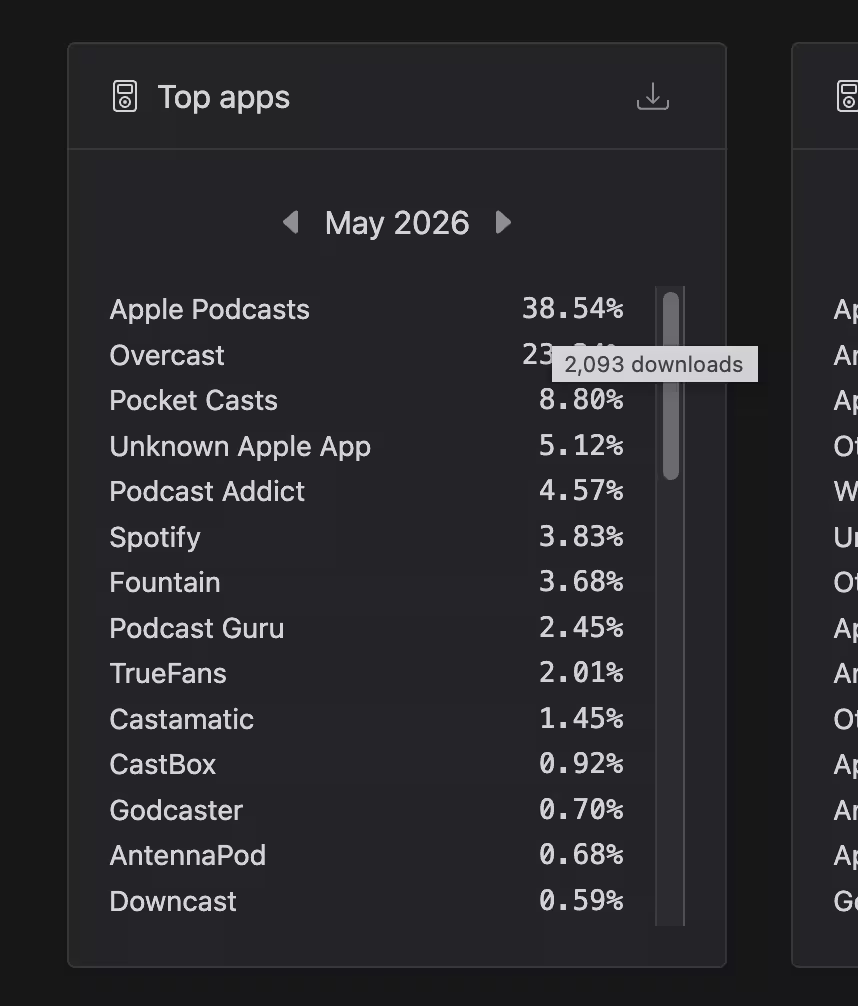
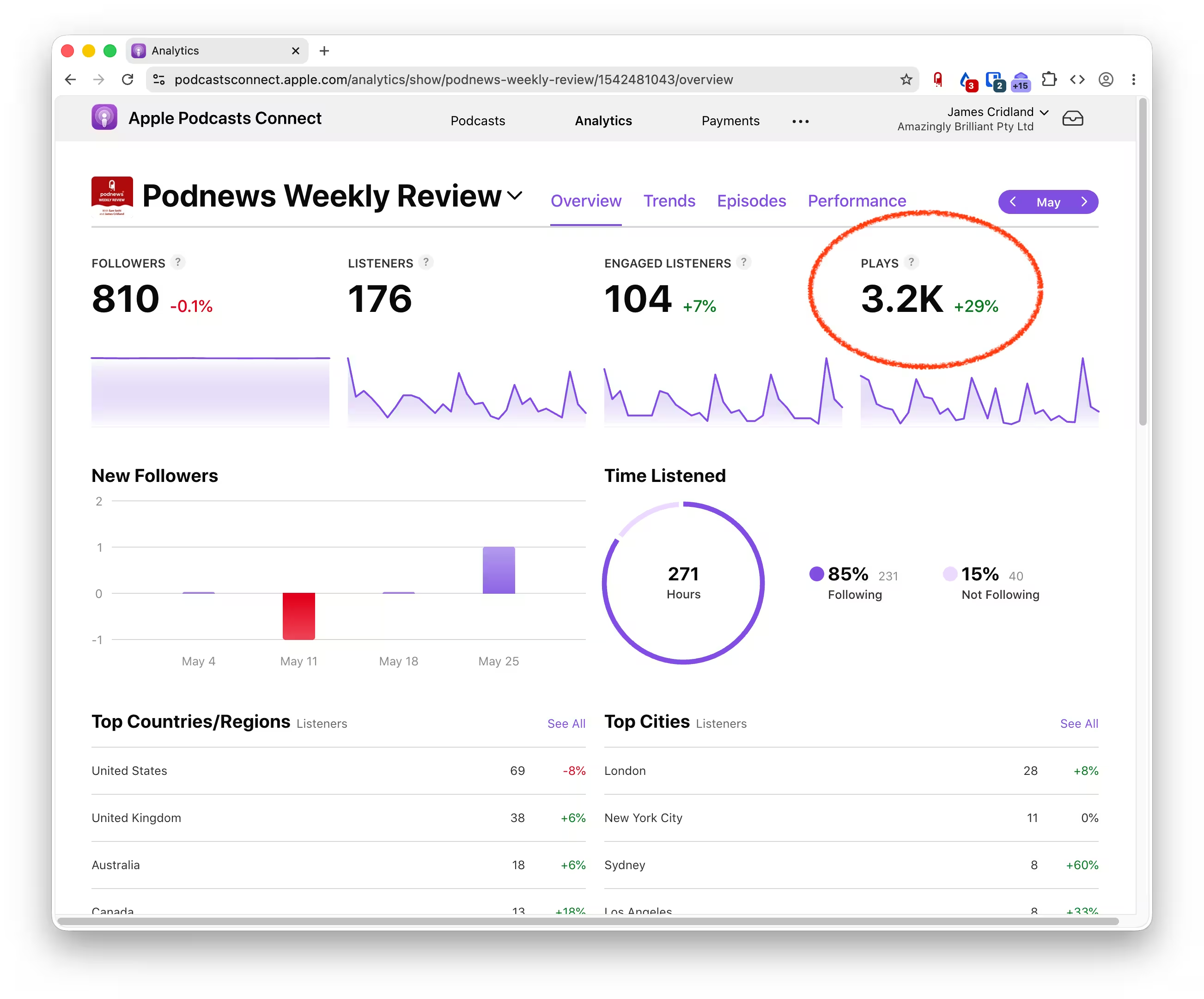
- Apple Podcasts, which is not involved in AMP, defines a play in Apple Podcasts Connect as “the number of plays on unique devices where the play duration is greater than 0 seconds” - and isn’t limited to one per user. In practice, a “play” appears to measure every touch of the play button (even, one suspects, after pauses for turn-by-turn instructions while driving). As one example, in May, the Podnews Weekly Review podcast saw 2,093 downloads to Apple Podcasts, but 3,200 “plays”.
- However YouTube,
which is not involved in AMP(UPDATE: we have since confirmed that they are taking part), highlights “views” across its website, but does not publicly define what a view is. It’s generally believed, however, that a “view” means a minimum of 30 seconds played (for videos longer than that). In our view, if both YouTube and Spotify both now agree on a “30 seconds” metric - then, because that’s where the majority of podcasts are consumed, that’s a de-facto standard anyway. But, for the benefit of the industry, will everyone else agree? - When US radio switched from a 5 minute to 3 minute threshold last year, that added another 23% to the numbers. We’re doing some data work to discover what it might mean for podcasting, too.
-
Stampede Social has unveiled a set of new tools for podcasters who use Instagram. You can set the tool to instantly send your latest episode - complete with episode artwork - to anyone who DMs a keyword to you: making it much easier to convert an Insta reader to a podcast listener. The tool can also be used for advertiser feedback, and works with your existing RSS feed.
-
Back in May last year, Spotify came under fire for listing spam podcasts that operated as links to websites for illegal drugs. After a CNN story, Spotify said they’d removed them; but that kicked off an investigation from US Senator Maggie Hassan, which was released yesterday. The full investigation suggests that Spotify removed 3,500 accounts in 2025 (and over 57,000 different episodes), but didn’t report a single account to law enforcement. Spotify doesn’t track any use of links in episode descriptions, either, we learn - and some shows had been on the platform for four years.
- iHeartRadio, Amazon Music and Acast’s Podchaser also had this kind of spam in their directory, says the committee’s report. Jellypod, an AI-generated podcast tool, is highlighted as one of the tools used to publish this content. We’ve covered efforts to remove spam shows like this in the past (like this, back in 2022, and the Podcast Index’s work more recently). In our opinion, this isn’t a Spotify problem - it’s an industry-wide issue, that we should be working together to combat. It shouldn’t be hard to automatically share potentially problematic feeds across the industry: and to highlight podcast hosting companies who fail to adequately moderate their users’ content.
-
Are short podcasts a growing trend? In Spain, José A. Gelado has crunched the numbers, to learn that - no - the most popular podcasts in Spain are around an hour long. “For a podcast to succeed, it does not need to be short”, José says. The data also reveals that the three main platforms have little overlap - only 36 shows appear across Apple, iVoox and Spotify rankings - and almost 20% of shows on Spotify are there exclusively, with no open RSS feed.
Tips and tricks
- If all the talk of “plays”, “downloads” and “listens” above is hurting your head, we’d recommend our article how to understand podcast stats, which we’ve updated to include the new Spotify data, as well as video.
Podcast News - with Airwave




Podcast data

 #1 in Apple Podcasts (United States)

![THE DOUBLE[S]](https://i.podnews.network/r/t/150/1742294-1b6c7471.avif)


Events
- Getting
- the
- five
- latest
- events
Latest Jobs
- Getting
- the
- five
- latest
- jobs
The latest...
Readers and supporters
Gold supporters
























Silver supporters


