Spotify threatens industry with ad-skipping tool

EXCLUSIVE: In a significant threat to ad-funded shows, Spotify is testing a new feature in its app that will let users skip the ads in podcasts.
The tool, called “Skip Ahead”, is available for Premium users in selected markets, and enables them to skip entire ad breaks, intros, sponsorship messages, and even mentions of premium subscriptions. In our tests, a “Skip Ahead” button appears on-screen as soon as an ad-break starts. Just one tap of the “Skip Ahead” button moves a listener to the beginning of the next section, after the ads have finished. It only appears for ads, promos or intros.
The feature has not been announced by Spotify.
Podnews has evidence of this new ad-skipping function available in shows containing advertising from Spotify competitors Acast, Audacy and the New York Times, but also within Spotify’s own Bill Simmons show.
The “Skip ahead” feature appearing within Spotify’s own shows means that on the one hand, Spotify is selling ads, but is also marketing a “skip” feature to its own paying users, to enable those ads to not be heard. One podcast ad company told us that this could be considered fraudulent behaviour: the ads have been charged-for and stitched into the audio, but the listener has been actively encouraged not to listen to them.
The appearance of the feature alongside ads from Spotify’s competitors is equally problematic, since Spotify could hinder the effectiveness of advertising on podcasts owned by its competitors.
- And there’s more: a week after we published this story, we discover that Spotify is also running unskippable podcast ads, and has also make its terms and conditions mean that they have the legal right to edit your ads out in future..
See “Skip Ahead” in action
Here are a few clips of the “Skip Ahead” tool being used. You’ll see the Skip Ahead button appear in intros or ad breaks, and you’ll see it being clicked. Sometimes, it takes a second or two for the button to react.
Don’t listeners skip ads anyway?
It could be argued that this is just replicating listener behaviour - listeners sometimes skip ads, after all.
However, while listeners can skip ads in podcasts - and regularly claim they do - data from podcast analytics company Bumper, looking at real-life behaviour rather than survey claims, suggests that less than 10% of ad-breaks are actually skipped.
This new Spotify feature would appear to make it much easier to skip: requiring one button press to cleanly skip to the beginning of the next section of podcast. We calculated that to skip one of the ad breaks would have otherwise required nine taps on the “skip 15 seconds” button, and then would have slightly overshot the break, needing a further tap backwards. This reduces the work from the listener to just one tap.
The appearance of the “skip ahead” button on-screen is also a signal to the listener about the content they’re about to hear, and acts as an invitation to skip past.
The effect of Spotify on the podcast industry
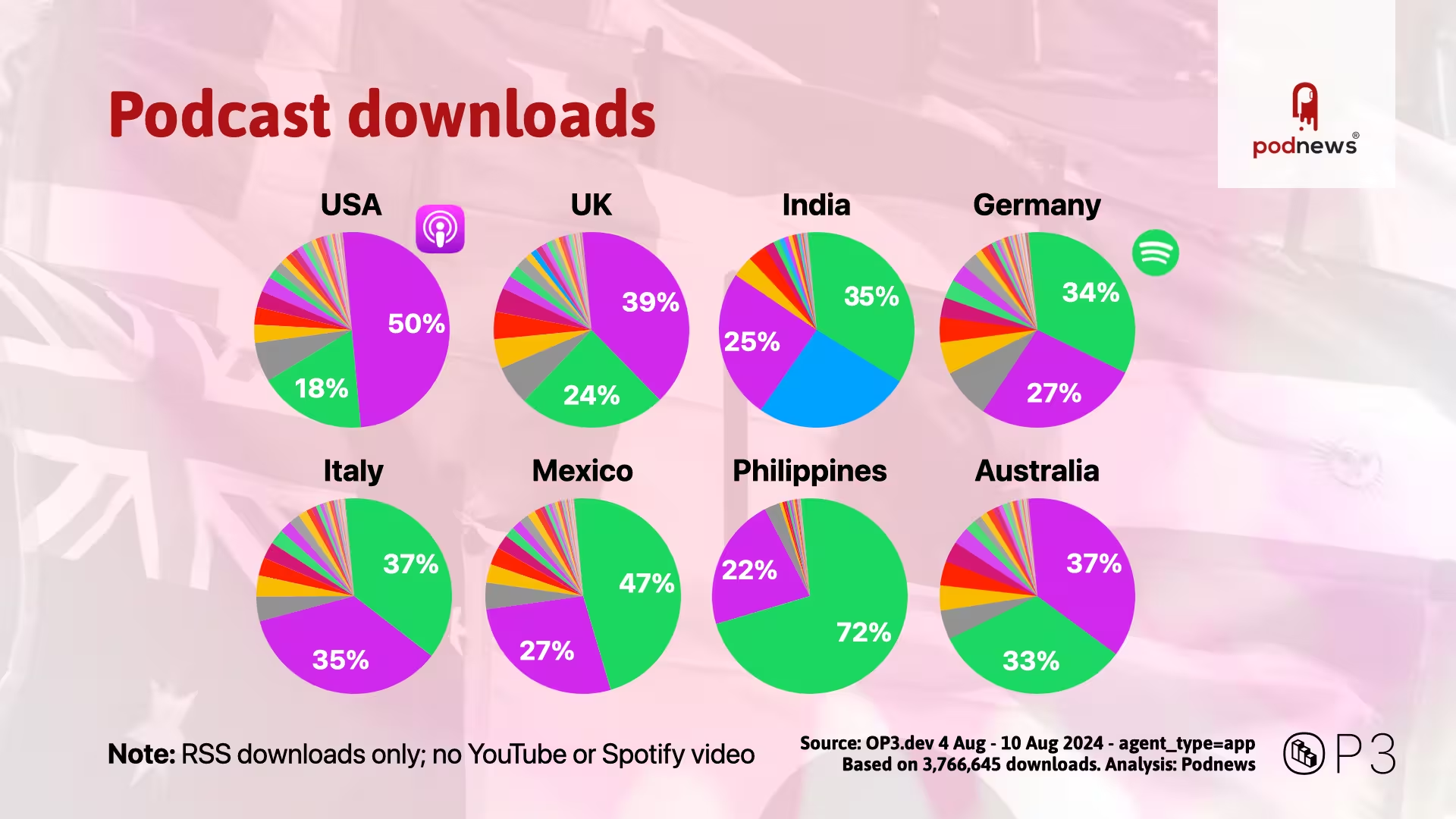
Podcast ad-skipping apps already exist. However, Podnews analysis of OP3 data suggests that Spotify is responsible for at least 25.6% of all podcast downloads globally. In many countries, Spotify is the biggest platform: particularly in emerging markets.
Specific availability of a function which has the effect of skipping the ads in such a mainstream podcast app threatens podcast creators that have chosen to earn money from ads. We assume that Spotify does not recompense creators if the skip button is used.
In our video, above, the “skip ahead” button also appears for content promoting premium subscriptions. Spotify isn’t just encouraging listeners to skip the ads - it’s also encouraging them to skip other methods of creator monetisation as well.
A Spotify spokesperson tells us: “We regularly conduct tests at Spotify — some tests become permanent features, while others help inform future product development. We’re exploring ways to make podcast listening and viewing more intuitive for Premium subscribers based on how people use the platform, with the goal of helping listeners spend more time enjoying podcasts. We’ll continue to evolve the experience as we learn.”
Spotify regularly runs tests in different markets and for different users. We understand this is for Premium subscribers only, and only available in specific markets; our video showing the feature is from a US Premium customer. We also understand the feature is available in the UK.
Podcast creators are unlikely to see any immediate effect. Ad delivery - delivery of the ads into the podcast audio - is not affected. However, ads work based on audiences hearing them. If enough people skip the advertising, then the ads will not be effective, and advertisers will not rebook campaigns.
Spotify has often been treated with suspicion by the rest of the podcast industry. The company started its podcast integration by copying podcast audio: entirely breaking dynamic advertising. Podcast hosting companies have to reach agreement with Spotify for so-called “pass through”, which defeats this behaviour. German podcast host Podigee, for example, trumpeted its ability for passthrough in late 2019 as being “one of only a handful of podcast hosters worldwide”.
The compromises with Spotify’s own advertising business has caused concern. “By placing your trust in Spotify, you essentially agree to a one-sided relationship where Spotify holds all the power and reaps all the rewards,” said Todd Cochrane in an opinion piece for Podcaster News, in Aug 2024. “While the allure of Spotify’s vast audience is tempting, the cost of compromising your listeners’ privacy and selling out their data is too high.”
The revelation that Spotify is actively building an ad-skipping feature will not be received well.
Is ad-skipping always bad?
The use of ad-skipping and browser ad-blocking is controversial. Some believe that it goes against the unwritten contract between creators and apps, and shows a lack of respect for a creator’s chosen method of monetisation. Others suggest that it’s entirely up to listeners how they wish to consume content on their own device.
Whatever your view is, currently ad-blocking or ad-skipping is not offered as part of a mainstream app, and requires users to install additional software. Neither Chrome, Safari or Apple Podcasts offers ad-skipping as a standard feature in its software. Or, Spotify - yet.
However, there are limits. Pop-up ads are blocked in all major browsers, as well as other annoyances like auto-playing audio. There may, similarly, be an argument to enforce sensible limits on ads in podcast apps.
As we documented at the bottom of a recent Podnews newsletter, some podcasts are starting with more than eight minutes of ads. This is unsustainable - both for the advertising industry, and for the listener. It is hard to argue in favour of eight minutes of ads in a row. We’d suggest it merely teaches listeners to skip those prerolls altogether - easily enough done, since their phone is still in their hand having selected the show in the first place.
Perhaps we might agree, as an industry, to never go above three minutes of ads (or something); and perhaps Spotify’s feature might skip “overly-long ad breaks”. That would both be a service to listeners, and would keep the industry honest and respectful of their time.
But then, the podcast we highlighted that started with more than eight minutes of ads? That was served by Megaphone: the podcast host and monetisation company that is owned… by Spotify.